Pros and Cons of the Cloud

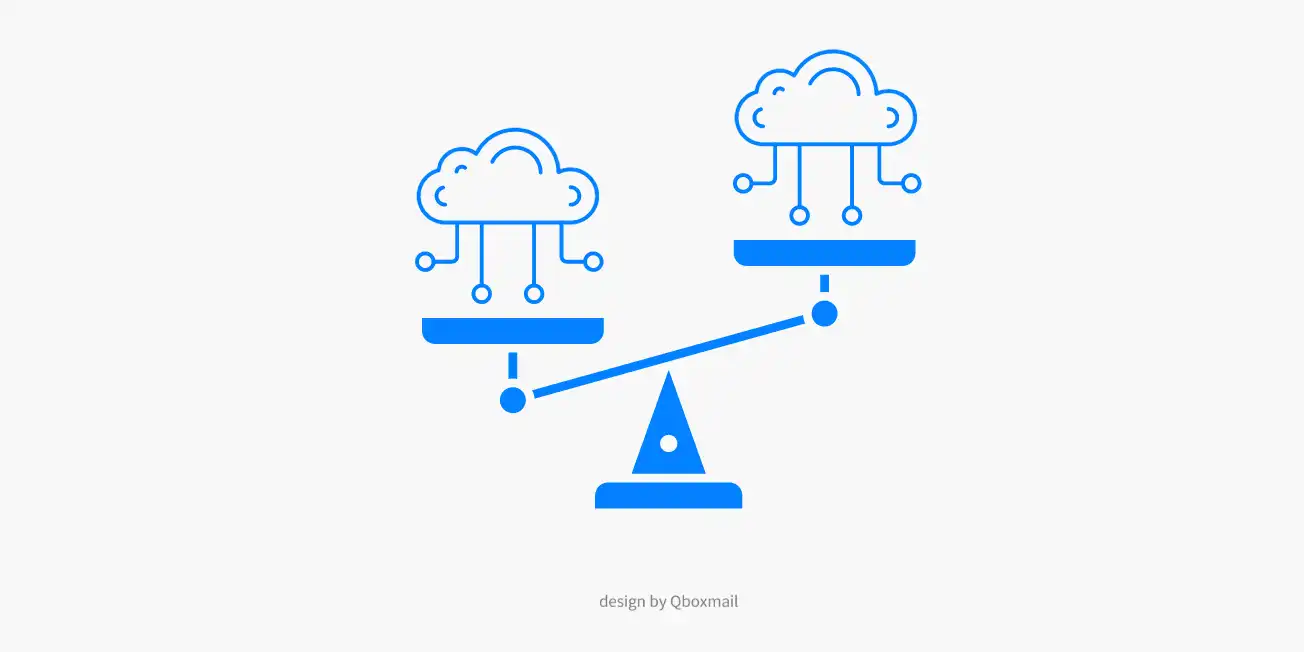
The Cloud Business Transformation
Cloud computing has reshaped how companies manage IT systems, share data, and collaborate. It’s no longer a trend but a necessity for maintaining competitiveness and efficiency. Providers offer flexible services such as Infrastructure as a Service (IaaS) and Software as a Service (SaaS) that let businesses scale quickly and adapt to evolving needs.
Moving to the Cloud with a pay-per-use model gives companies operational agility, reduces setup costs, and encourages innovation.
Why MSPs and Resellers Choose the Cloud
For MSPs and IT resellers, adopting a cloud-based email solution brings clear advantages.
It cuts operational costs, increases flexibility, enhances data security, and allows easy scalability without managing complex on-premise servers.
After comparing on-Premise and Cloud solutions, let’s explore the benefits of using cloud-based email, calendar, and contacts management.
Main Benefits of Cloud Email
- Flexibility and scalability:
This doesn’t require additional investments in hardware or software licenses. This flexibility allows adapting to changes in workload and email boxes sold to customers. - Global accessibility:
With cloud-based emails, access to corporate communications is no longer limited to the company’s physical headquarters. Employees can access their emails from anywhere and any device with an active Internet connection. This global accessibility promotes remote collaboration and flexible work. - Reliability and operational continuity:
Cloud-based emails offer a level of reliability and operational continuity that is difficult to match by on-premise solutions. Cloud-based emails, deployed across multiple servers with data replication, ensure high availability and resilience to hardware failures. - Data security and regulatory compliance:
Cloud service providers invest significant resources in protecting and securing their customers’ data. By implementing advanced cybersecurity measures, access controls, and continuous monitoring, cloud-based emails provide a secure environment for exchanging sensitive information. Many providers adhere to industry regulations like GDPR, ISO 9001, and ISO 27001, or are qualified to serve public and government entities. - Updates and continuous innovation:
Companies using cloud-based emails receive regular software updates and new features without managing installation and maintenance.
This allows focusing on core activities without having to allocate internal resources to IT infrastructure management.
Limits of the Cloud
Despite its advantages, the Cloud has some limitations to keep in mind.
The most common issue is dependence on a stable Internet connection. Without it, users might temporarily lose access to email and applications. Even top-tier cloud providers can experience downtime caused by technical incidents or external events. During these periods, access remains unavailable until the issue is fixed.
To minimize risk, companies should regularly back up their cloud data and keep a local copy at their headquarters or in their own data center.
Before signing with a provider, always review the Service Level Agreements (SLAs) to understand uptime guarantees and response times.
When to Use Cloud Services
Using the Cloud enables more flexible and convenient access to email from any location and device connected to the Internet. This is particularly useful for companies with employees working remotely or on the move, allowing greater mobility and flexibility in the work environment.
Companies of all sizes and industries regularly use the cloud to meet their email needs. This includes small businesses, eager to reduce costs and simplify IT management, as well as medium-large and large companies, seeking scalability, advanced security solutions, and always-available services.
In general, the Cloud represents an ideal choice for any company interested in improving efficiency, reducing costs, and gaining greater flexibility in managing its IT infrastructure.
Qboxmail option
Qboxmail is a cloud-based email, calendar, and contacts management platform designed to offer businesses and IT service resellers secure email access from any device, at any time.
With a range of advanced features and flexible access options, Qboxmail stands out as the ideal solution for corporate communication needs.
Contact us for a 30-day free trial and discover more closely the numerous benefits of the cloud for your business.
The Importance of Data Sovereignty

Qboxmail at MSP Global 2025
