The Hidden Costs of On-Premise Mail Servers


Why Companies Still Choose On-Premise
Many organizations stay loyal to systems they’ve used for years, valuing stability and routine. Yet, in a fast-evolving ICT environment, that choice can become a liability.
As cybersecurity threats evolve, companies must update and secure their systems continuously.
Operating an on-premise mail server demands maintenance, patching, and hardware renewal.
These tasks raise operating costs and complicate management over time. While on-premise systems offer control, they become a burden as the infrastructure ages.
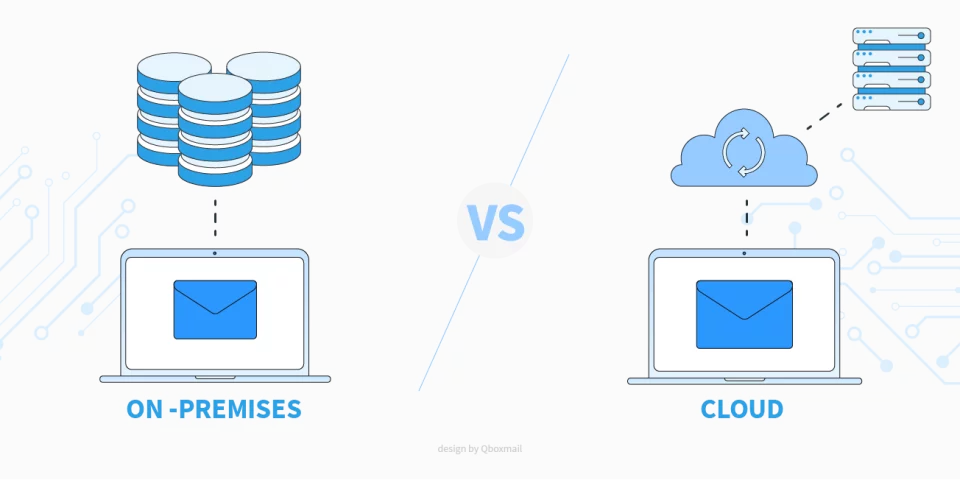
However, choosing the Cloud often emerges as the optimal solution, offering advantages in flexibility, security, scalability, and long-term savings.
Why the Cloud Offers a Better Alternative
Cloud solutions deliver flexibility, security, scalability, and long-term savings. Before deciding, consider the main drawbacks of keeping your mail server on-site.
Key Drawbacks of On-Premise Mail Servers
Below are the main factors that make on-premise email hosting less effective and more costly compared to cloud services.
1. High Initial Costs
Running an on-premise mail server requires a large upfront investment in hardware, software, and setup.
It also demands physical space, constant power, and cooling systems to stay operational.
2. Expensive Maintenance
An on-premise environment needs constant attention from skilled staff.
Updates, patch management, and hardware replacements increase costs and divert internal resources.
3. Risk of Service Interruptions
Maintenance or unexpected failures cause downtime, affecting productivity and reputation.
Even short outages can result in data loss and recovery delays.
4. Limited Scalability
Growth requires new servers and configurations, making scaling complex and expensive.
Hardware limitations restrict your ability to expand quickly.
5. Security and Compliance Challenges
Protecting data and meeting regulations like GDPR takes expertise and investment.
Without it, sensitive information remains exposed to security risks.
6. Complex Software Updates
Installing patches or updates demands precision and qualified staff.
Improper handling can introduce vulnerabilities instead of fixing them.
7. Hardware Management Complexity
On-premise hardware needs maintenance, replacements, and logistics planning.
It requires a dedicated technical team, regular training, and a solid budget.
8. Limited Mobility
Internal-only access makes remote work difficult.
Employees outside the company network struggle to connect, reducing flexibility.
9. Lack of Flexibility
An on-premise system limits collaboration between teams in different locations.
Cloud platforms, instead, guarantee secure access from any device connected to the Internet.
10. Rapid Technological Obsolescence
Technology evolves fast.
On-premise servers quickly become outdated, forcing expensive upgrades to keep up.
Switch to Cloud Email for Efficiency and Security
While on-premise servers offer direct control, they come with high costs, complexity, and limited agility.
A cloud-based solution provides flexibility, continuous updates, and stronger protection.
Qboxmail delivers a secure cloud email platform designed for businesses and IT resellers. Try our service for free for 30 days and see how it can simplify management and improve productivity.
Contact us and learn more about our Cloud Email solution
Email Hosting in Cloud and On-Prem

Cloudfest 2025: Discover the Future of the Cloud