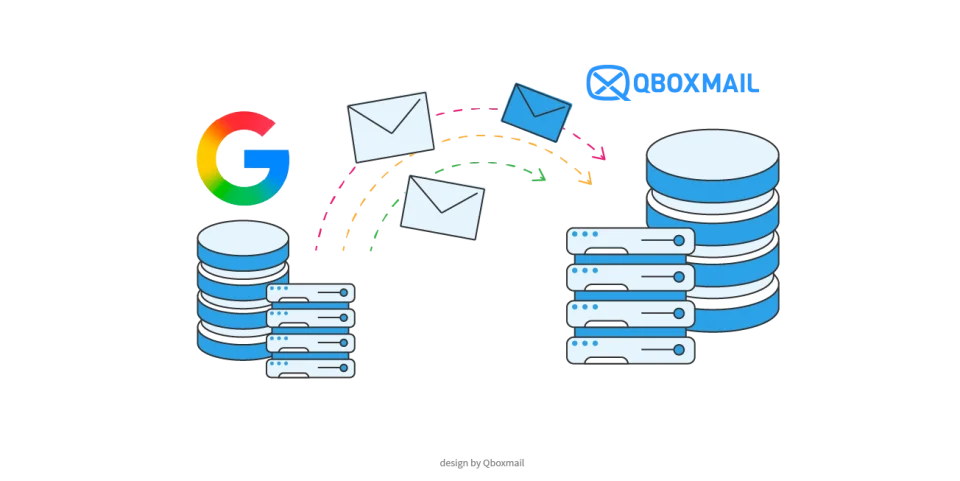
How to Migrate to Qboxmail from a Dedicated Server


Many companies and resellers that rely on a dedicated server to manage their email are reconsidering their operational model. In some cases the trigger comes from rising costs, while in others it comes from reduced predictability of expenses over time.
In every situation the same question emerges: does it still make sense to maintain a dedicated infrastructure for a service that must ensure stability, continuity and cost control?
A dedicated server introduces several variables that go far beyond the price of a single mailbox. One must consider the allocated resources, the maintenance of the environment, software updates, the management of critical issues and the overall impact on the technical organization. When the number of mailboxes grows or unit costs increase, the economic balance can change quickly.
For a reseller this situation means protecting margins or reviewing pricing. For a company it means accepting a higher expense without obtaining a proportional benefit in day-to-day operations.
Switching from a dedicated infrastructure to a new email service also requires careful planning for the transfer of mailboxes and email history. If you want to learn more about the process as a whole, find out how business email migration works and the main stages to consider when changing providers.
What changes when moving from a dedicated server to Qboxmail?
From a technical perspective, email transfer follows a structured process that allows mailboxes to remain operational during the transition while preserving message history.
Through the Qboxmail Control Panel, you can organize the different activities required for the transfer, from setting up the mailboxes to synchronizing messages. To learn more about how the available tools work, find out how to plan email imports and migrations independently.
With Qboxmail, you no longer need to manage the underlying infrastructure, because both the software and data centers are part of an ecosystem managed directly by Qboxmail.
This allows you to focus on the service you provide to your customers or on your internal operations, without having to allocate technical resources to maintain the email environment.
The advantages
A dedicated infrastructure often generates a cost structure that does not always follow actual usage.
A pay-per-use model instead allows you to pay only for active mailboxes, without fixed costs or setup fees. As volume increases, the unit cost decreases, making it easier to plan expenses and maintain long-term stability.
For resellers this means building a consistent price list and protecting margins. For organizations that use the service directly, it means aligning the cost of email with the real size of the organization.
If the starting system is a dedicated server and the reseller has administrative access, Qboxmail can support the migration by transferring mailboxes in bulk, reducing the operational work required to complete the transition.
Worried about losing your email?
Protecting business continuity
One of the most common concerns is the risk of data loss or business disruption during the transition. A well-planned migration allows you to transfer the email history and schedule the DNS record change while minimizing the impact on users.
This helps maintain business continuity throughout the transition and ensures that the communication history is available in the new environment before decommissioning the previous server.
When does it make sense to consider the change?
If the cost of the dedicated server has increased, or if managing the infrastructure requires a technical effort that no longer matches the value it generates, it becomes useful to evaluate the available alternatives.
Migrating to Qboxmail introduces a model that is more sustainable from an economic perspective and easier to manage from an operational standpoint.
Before renewing or accepting a price increase for a dedicated server, analyze the overall economic impact carefully and evaluate a model that better reflects real usage.
Start using Email Hosting free for 30 days and verify features, management workflows and migration timing directly, planning the transition gradually before making a final decision.

Business email migration: how to switch providers without losing data
How to Choose a Business Email Provider: 6 Key Criteria