CrowdStrike: the illusion and risk of “too big to fail”

A Lesson for IT Industry
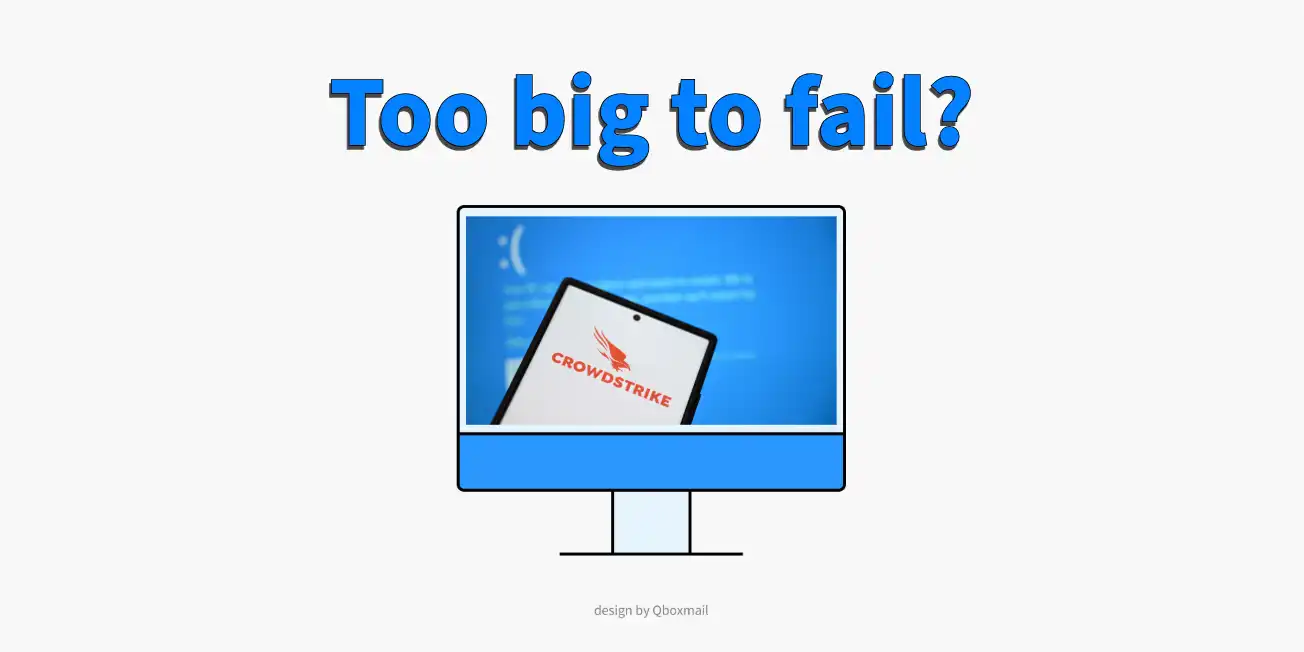
On July 19, 2024, an update to the CrowdStrike Falcon Sensor caused a global system crash.
It included a faulty file (csagent.sys) that made millions of Windows devices show the blue screen of death.
The issue disrupted airports, banks, hospitals, and businesses across the world.
When an Update Becomes a Global Issue
Every software update should go through structured testing before release.
In this case, a single unverified file was enough to bring down critical infrastructures, showing how fragile a global IT ecosystem can be when trust replaces control. Rigorous testing and staged rollouts can prevent these failures and protect business operations.
Business Continuity Under Pressure
Many organizations discovered that their business continuity plans were not as effective as they thought.
The incident showed that response strategies often overlook scenarios where a single supplier causes a systemic outage.
A continuity plan should always include practical recovery actions, tested regularly and supported by the right number of technical staff able to intervene quickly.
The Supply Chain Challenge
Modern IT systems often depend on long and complex supply chains that include several software providers. This model increases flexibility but also the potential for disruption.
When an external component fails, recovery depends on third-party timelines and priorities, which may not align with a company’s immediate needs.
By contrast, providers who develop and manage their entire infrastructure internally can respond faster and maintain higher control over reliability and security.
Why Internal Development Matters
The CrowdStrike event reminded the industry that even established players can make mistakes.
For companies that manage critical operations, relying on suppliers who build and maintain their own technology stack reduces exposure to third-party vulnerabilities.
Internal development means full visibility, faster response times, and better long-term stability.
The need for technical staA Call for Awareness
Incidents like this are not a reason to distrust technology but an invitation to question how it is managed.
The size of a vendor does not guarantee resilience.
Choosing partners who combine solid engineering with transparent and independent infrastructure can make the difference between a temporary inconvenience and a business-critical failure.